
How CGI and VFX Are Reshaping Product Marketing
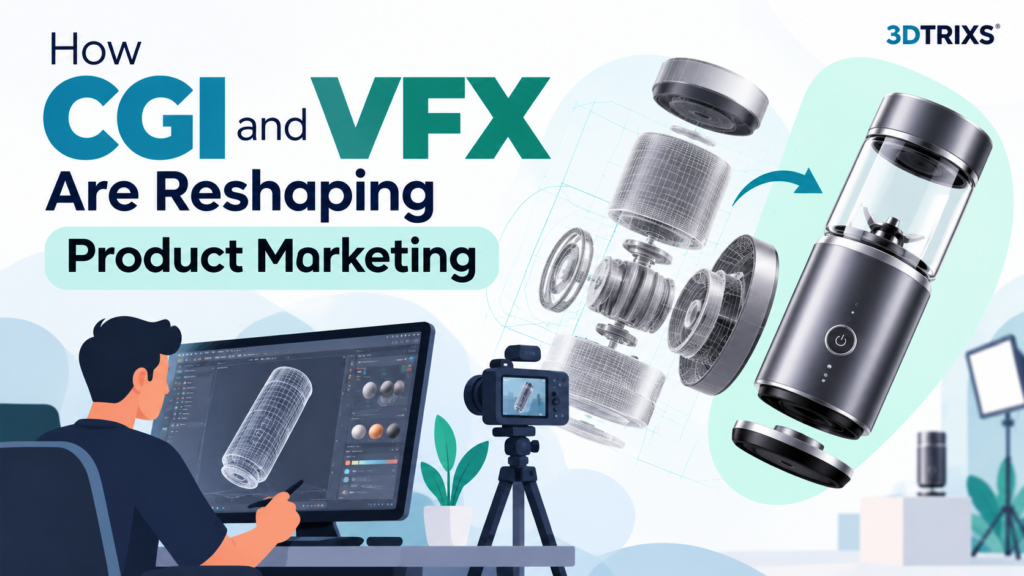
A product campaign used to begin with a simple question. How do we film this product in the best possible way? Today, brands can ask something much bigger. What is the most powerful way to present this product, even if the visual would be difficult or impossible to capture with a camera?
That shift is why CGI Product Marketing and VFX in Product Marketing are becoming more important. CGI gives brands the freedom to create products, environments, camera movements, internal mechanisms, and visual experiences that traditional production may not allow. VFX extends real footage by adding, enhancing, or transforming what appears on screen.
The result is not just more impressive advertising. Brands can explain products more clearly, build stronger Product Visuals, create campaign assets before a physical product is fully available, and present features from perspectives customers could never experience in real life.
What Is CGI and VFX in Product Marketing
CGI and VFX help brands create or enhance product visuals beyond the limitations of traditional photography and video production.
CGI is used to build digital products, environments, lighting, movement, and visual effects from the ground up. VFX is typically used to combine real footage with digital elements, enhance scenes, create transitions, or add visual elements that were not captured during filming.
In modern product campaigns, the two often work together. A product may be filmed physically and then placed into a digital environment, or a fully CGI product may be combined with real footage to create a more believable and engaging final video.
Why Are Brands Using CGI for Product Marketing
Brands use CGI because it gives them much greater control over how a product looks, moves, and appears within a campaign.
A traditional shoot is limited by physical locations, product availability, camera movement, lighting conditions, and what can realistically be built or filmed. CGI removes many of these restrictions. A product can float, separate into components, reveal its internal structure, or appear inside environments that would be difficult or expensive to create physically.
This makes CGI useful when the marketing idea depends on precision, imagination, or visual access that a camera cannot easily provide. It also allows creative teams to refine lighting, materials, camera angles, and environments long after the initial asset has been created.

How Does VFX Change Traditional Product Videos
VFX expands what is possible with real footage by combining physical production with digital elements and visual enhancements.
Brands do not always need to choose between live action and CGI. In many cases, the strongest product videos use both. Real footage can provide natural movement, people, and physical context, while VFX can transform the environment, add product effects, create seamless transitions, or introduce visuals that would be difficult to capture on set.
For example, a technology product could be filmed in a real office while motion graphics and VFX reveal data moving through the system. A footwear campaign could begin with a real model and then transition into a digitally created environment that adds energy and visual impact without losing the realism of the original footage.
How Do CGI and VFX Help Explain Product Features
CGI and VFX can turn product features that are difficult to describe into clear visual demonstrations.
This is especially valuable for technical or layered products. A camera can show the outside of a product, but CGI can reveal what happens inside it. Internal mechanisms, airflow, components, materials, moving parts, and hidden technologies can all be visualised in a way that is easy to understand.
Instead of describing a feature through long text, brands can show it working. This creates a stronger connection between the feature and the benefit because customers can see what the technology actually does rather than being asked to imagine it.
What Types of Product Visuals Can CGI Create
CGI can support everything from realistic product renders to cinematic campaign visuals, depending on the objective.
Brands may use CGI for premium hero shots, feature demonstrations, lifestyle visuals, exploded views, technical cutaways, ecommerce imagery, social media content, or conceptual campaign scenes. The same digital product can often support several different visual formats without needing a new physical shoot each time.
A premium product campaign may focus on lighting, materials, reflections, and camera movement. A technical campaign may use exploded views or internal visualisations to explain how the product works. A conceptual campaign may place the product inside an impossible or highly stylised environment to create stronger brand impact.
Why Are Impossible Camera Shots Valuable in Product Marketing
Impossible camera movements can make familiar products more interesting by showing them from perspectives customers could never experience in real life.
A virtual camera is not limited by physical space. It can move through a sealed device, travel between internal components, change scale instantly, or transition from the outside of a product into its internal mechanism in one continuous movement.
This can be more than a visual trick. When used strategically, impossible camera movement can help explain functionality, reveal hidden details, or guide the viewer through a product story in a more intuitive way.
Can CGI Replace Product Photography
CGI can replace product photography in some situations, but the best choice depends on the product, campaign, realism required, and type of content being created.
Traditional photography is still valuable when brands need authentic lifestyle imagery, real human interaction, or physical product context. CGI is stronger when precise product control, multiple visual variations, impossible environments, or pre launch content is required.
The two approaches can also work together. Real photography can provide authenticity while CGI supports detailed feature visuals, product close ups, technical demonstrations, and campaign scenes that would be difficult to create physically.
| Traditional Photography | CGI Product Visuals |
|---|---|
| Strong for authentic real world context | Strong for precise visual control |
| Requires the physical product | Can begin before final manufacturing |
| Limited by locations and physical setups | Environments can be created digitally |
| Reshoots may require new production | Camera and lighting can be adjusted later |
How Can CGI Support Products Before They Are Manufactured
CGI can help marketing teams begin creating visual content before the final physical product is ready, provided accurate design data or references are available.
This can be useful for product launches, sales presentations, internal communication, investor materials, dealer presentations, and early campaign planning. Instead of waiting for final production samples, brands can begin developing visual assets earlier in the marketing process.
Accuracy is important. If the physical product changes during development, the digital asset should be updated as well. CGI works best when it helps marketing move faster without creating a mismatch between the campaign and the product customers eventually receive.
Why Does Product Accuracy Matter in CGI
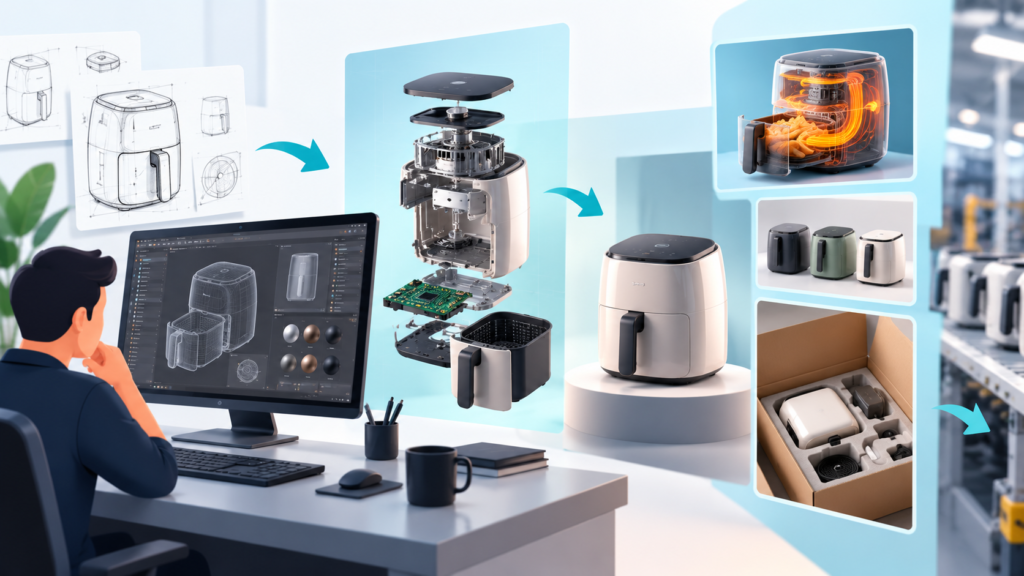
A CGI visual may look impressive, but it fails as product marketing if it does not accurately represent the actual product.
Small details can influence how believable a digital product feels. Product proportions, button placement, edge thickness, logo position, surface finish, material behaviour, colour, and assembly all matter. In ecommerce and advertising, these details can also influence customer expectations.
Creative freedom should therefore happen around the product rather than changing the product itself. A dramatic environment or impossible camera movement can be highly creative while the product remains technically accurate.
How Do CGI and VFX Improve Campaign Scalability
Once a strong digital product asset exists, brands can often create multiple campaign variations more efficiently across different platforms and formats.
A product model created for one hero film can also support short social videos, feature animations, ecommerce visuals, digital advertisements, still renders, and presentation content. Different camera angles, lighting setups, and environments can be created without rebuilding the product for every new asset.
This makes CGI useful for brands that need consistent visual content across many touchpoints. The important part is making sure each asset has a clear role instead of simply creating more content because it is technically possible.
What Makes CGI Look Premium Instead of Fake
Premium CGI depends on accurate modelling, realistic materials, purposeful lighting, strong camera work, and careful attention to small details.
The software alone does not create realism. Materials need to react to light correctly. Metallic surfaces should not behave like plastic, glass should reflect and refract naturally, and soft materials need the right texture and surface response.
Camera movement, composition, animation, and rendering quality also matter. When modelling, texturing, lighting, animation, compositing, and creative direction are treated as one connected process, the final result feels much more convincing.
Where Does VFX Add the Most Value
VFX adds the most value when it helps communicate the product story rather than simply making the video look more expensive.
Visual effects can create scale, transformation, movement, simulations, digital environments, and seamless transitions. These techniques can be powerful when they help demonstrate performance, reveal technology, show a transformation, or create an interaction that cannot happen in real life.
The effect itself should not become more important than the product. If viewers remember the VFX but forget what the product does or why it matters, the execution has probably taken over the message.
How Are CGI and VFX Changing Product Marketing Strategy
CGI and VFX are changing product marketing by allowing brands to think beyond the limitations of a physical shoot from the very beginning of the campaign.
Instead of asking where the product can be filmed, brands can ask what the customer needs to see. Instead of asking whether a camera can capture a certain feature, creative teams can focus on the best way to demonstrate it.
That shift creates more freedom, but it also creates more responsibility. When almost anything can be visualised, the creative team needs to decide which ideas actually improve understanding, strengthen the brand, or make the campaign more memorable.
3DTRIXS Insight
One of the biggest advantages we see in CGI and VFX is not simply the ability to create spectacular visuals. It is the ability to remove visual limitations when those limitations prevent a product from being understood properly.
Sometimes the most useful CGI shot is not the most dramatic one. It may simply reveal an internal component, show a layer, explain a mechanism, or demonstrate a feature that cannot be captured clearly on camera. In other projects, the objective may be to create a premium hero visual that builds desire rather than explanation.
The important decision is understanding what the visual needs to achieve before deciding how complex the CGI or VFX should become. That is where creative direction matters just as much as technical execution.
How Can 3DTRIXS Help Brands With CGI and VFX
3DTRIXS helps brands combine CGI, VFX, 3D animation, product visualisation, and video production to create product content built around specific marketing goals.
Projects can range from realistic CGI product visuals and technical feature demonstrations to cinematic product films, hybrid live action campaigns, and high impact visual effects. The production approach depends on whether the objective is clarity, premium presentation, visual impact, or a combination of all three.
If customers need to understand how a product works, the visual strategy should focus on explanation. If the campaign needs to build a premium perception, the production may focus more on lighting, composition, environment, and movement. CGI and VFX can support both when they are used with a clear purpose.





Founded: 2014
Team Size: 40 to 50 Employees
Clients: Amazon, Paypal, Deloitte, Levis, Intel, EY and many more.
Pricing: $1,000+
Completed Projects: 8000+ | Clients: 800+ | Serving Countries: 15+

Conclusion
CGI and VFX are reshaping product marketing because brands are no longer restricted to what can physically be filmed. Products can be opened, transformed, visualised internally, placed inside impossible environments, and shown from perspectives customers could never experience in real life.
That freedom creates new opportunities for product communication, but it does not remove the need for strategy. The most effective CGI and VFX content begins with a clear understanding of what the audience needs to see, understand, or feel.
Sometimes that means creating a cinematic campaign visual. Sometimes it means explaining one technical feature clearly. And sometimes it means combining real footage with digital production so naturally that the viewer never thinks about how the visual was created.
CGI and VFX are valuable because they give brands more ways to communicate what reality alone cannot show.
Key Takeaways
CGI gives brands greater control over product presentation and visual storytelling.
VFX can extend real footage beyond physical production limitations.
Both techniques can help explain hidden features and technical processes more clearly.
Digital product assets can support multiple campaign formats and platforms.
Product accuracy remains essential even when the surrounding visual world is highly creative.
The strongest CGI and VFX campaigns begin with a marketing objective rather than an effect.
Frequently Asked Questions
What is CGI in product marketing
CGI in product marketing uses computer generated imagery to create or visualise products, environments, movements, and features digitally. It can support product videos, ecommerce visuals, advertisements, technical demonstrations, and campaign content.
How is VFX used in product advertising
VFX combines real footage with digital environments, CGI products, simulations, transitions, graphics, and other visual elements. This helps create scenes and product interactions that would be difficult to capture entirely in camera.
Is CGI useful for ecommerce products
Yes. CGI can provide controlled product angles, feature visualisations, lifestyle environments, still images, and video assets. Product accuracy should remain a priority when CGI is used for ecommerce.
Can CGI be created before a physical product exists
Yes, provided accurate design data or reliable references are available. This can allow marketing teams to begin creating product visuals before final manufacturing, although the digital asset should be updated if the physical product changes.
Is CGI better than traditional product photography
Neither method is automatically better. Photography is strong for authentic real world representation, while CGI provides more control and flexibility. Many campaigns combine both depending on the content requirement.
What makes CGI product visuals realistic
Realistic CGI depends on accurate modelling, materials, textures, lighting, camera behaviour, rendering, compositing, and close attention to product details.
Why should brands use CGI and VFX in product marketing
CGI and VFX can help brands explain features, overcome production limitations, create distinctive campaign visuals, produce content before products are widely available, and develop multiple visual assets around the same product.
Have a Project in Mind?
Tell us about your requirements, and our team will get in touch with you.
