
Live-action vs. animation: which video style fits your business?
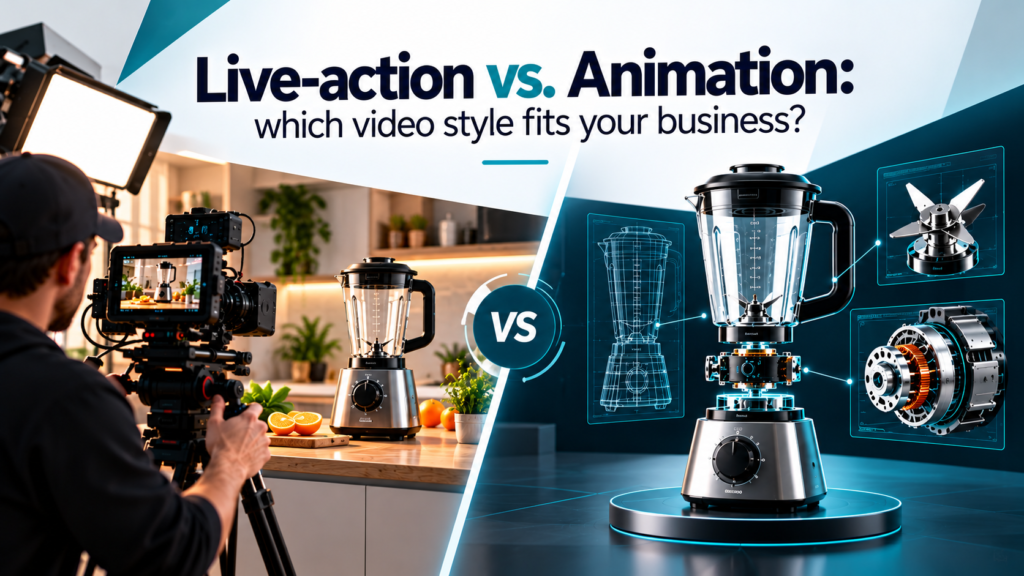
Choosing between live action and animation is one of the first major decisions businesses face when planning a video. Both approaches can explain products, build brand awareness and communicate important information, but they achieve these goals in different ways.
Live-action videos capture real people, products and environments using cameras. Animation creates visuals through illustrations, motion graphics or computer-generated 3D models. One offers direct access to the physical world, while the other allows businesses to visualize ideas that may be difficult or impossible to film.
For example, a manufacturing company might use live-action footage to showcase its production facility and employees. The same company could use 3D animation to demonstrate how a machine operates internally, revealing components that would otherwise remain hidden.
The choice between live action vs animation should therefore depend on what the audience needs to understand, rather than which style appears more modern or visually impressive.
This guide explores their differences, advantages, limitations, costs, production timelines and applications to help businesses choose the most suitable approach.
What Is the Difference Between Live Action and Animation?
The main difference is how the visuals are created. Live action records real subjects through a camera, while animation builds visual sequences using designed or computer-generated elements.
Live-action production involves activities such as location selection, casting, lighting, filming and editing. Animation generally involves scripting, storyboarding, illustration or 3D modelling, movement, rendering and post-production.
Both approaches can deliver professional results, but they offer different levels of control over what viewers see.
| Comparison Factor | Live Action | Animation |
|---|---|---|
| Visual approach | Real people and environments | Illustrated or computer-generated visuals |
| Best suited for | Testimonials, corporate films, real demonstrations | Explainers, technical visuals, abstract concepts |
| Production requirements | Crew, equipment, locations and subjects | Designers, animators and digital assets |
| Visual flexibility | Limited by filming conditions | Greater control over created environments |
| Product demonstration | Shows real-world appearance and usage | Reveals internal mechanisms and processes |
| Revisions | May require additional filming | May require redesigning or rerendering |
| Main strength | Authenticity and real-world context | Clarity and visual control |
Neither method is universally better. The most effective choice depends on the message, audience and intended use of the video.
What Is Live-Action Video Production?
Live-action video production involves recording people, products, locations and activities using cameras. It is widely used for corporate films, advertisements, customer testimonials, interviews and product demonstrations.
One of its greatest advantages is the ability to show audiences something that genuinely exists. A customer can describe their experience, employees can explain their work and a product can be demonstrated in its intended environment.
For businesses where trust and credibility influence purchasing decisions, these real-world details can be valuable.
A manufacturing company, for instance, may want potential clients to see its factory, production equipment and quality-control processes. Live-action footage allows the company to present these facilities directly rather than relying on illustrations.

What Are the Advantages of Live-Action Videos?
Real people build credibility. Customer interviews, employee stories and leadership messages can help viewers understand the people behind a business. Real experiences are especially useful when a brand wants to establish confidence.
Products can be shown in everyday use. Live-action demonstrations help audiences understand physical scale, handling, appearance and the environment in which a product operates.
Human interaction supports storytelling. Expressions, conversations and natural interactions can communicate emotions that are important to advertisements, testimonials and brand films.
Existing environments become part of the story. Offices, factories, hospitals and retail spaces can provide useful context without needing to recreate those locations digitally.
What Are the Limitations of Live Action?
Live-action production depends on physical arrangements. Locations must be available, products need to be ready and filming schedules must accommodate crew members, presenters or actors.
Weather, lighting conditions, background noise and location restrictions can also affect production.
Another limitation is the ability to demonstrate information that cannot be captured directly. A camera can show a machine operating, but it may not explain the movement of components hidden inside its housing.
Significant changes after filming may also require additional footage, particularly when a product’s appearance or an important scene needs to be replaced.
When Should Businesses Choose Live Action?
Live action is particularly suitable for company profile videos, customer testimonials, recruitment films, facility walkthroughs, event coverage and realistic product demonstrations.
It works best when showing actual people, locations or product usage contributes directly to the message.
What Is Animation Video Production?
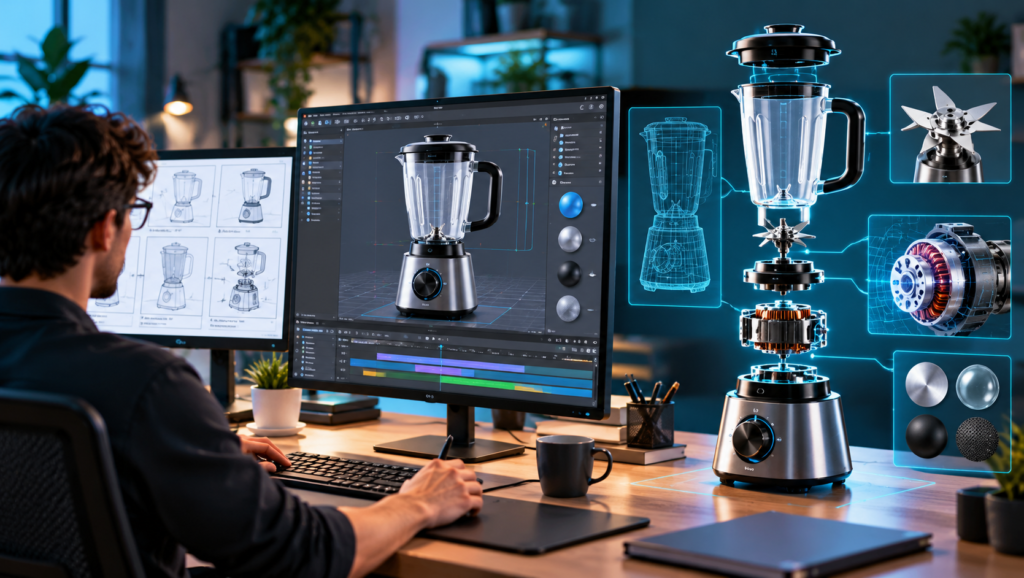
Animation creates moving visuals through illustrations, digital graphics or three-dimensional models. Instead of recording every scene through a camera, production teams design the elements and control how they appear and move.
Businesses commonly use animation to explain services, demonstrate technical processes, introduce software platforms and visualize products.
For example, a healthcare company may need to explain how a medical device operates. Animation can show the device from multiple angles, isolate its components and demonstrate internal processes that would be difficult to capture through filming.
Animation is not limited to one visual appearance. Businesses can choose simple diagrams, illustrated characters, motion graphics or highly realistic 3D visuals depending on their communication requirements.
What Are the Main Types of Animation Used by Businesses?
2D animation uses illustrations, characters and backgrounds created in two dimensions. It is commonly used for service explainers, educational videos and animated storytelling.
3D animation uses digital models with depth, allowing products and environments to be shown from different perspectives. It is particularly useful for product demonstrations, industrial machinery and technical explanations.
Motion graphics animates typography, icons, shapes and graphic elements. This approach is effective for communicating statistics, workflows, product features and corporate information.
Whiteboard animation presents drawings and diagrams progressively, helping viewers follow explanations step by step.
Each format has different production requirements. A simple motion graphics sequence may be sufficient for explaining a process, while a detailed 3D animation may be necessary to demonstrate mechanical components accurately.
What Are the Advantages of Animation?
Animation allows businesses to explain ideas that are difficult to show through conventional filming.
A product’s internal components can be separated and displayed individually. A complicated workflow can be simplified into a sequence of illustrations. A building can be visualized before construction, provided approved design references are available.
Another advantage is control over visual presentation. Camera movements, backgrounds, lighting, colors and product angles can be developed around the intended message.
Approved digital assets may also be reusable across future projects, although changes can still require additional modelling, animation or rendering.
What Are the Limitations of Animation?
Animation requires careful planning and creative development. Scripts, storyboards, character designs, product models and visual treatments often need approval before production progresses.
Complex 3D animation can require substantial modelling and rendering time, especially when technical accuracy or realistic materials are important.
Animation also cannot automatically replace the credibility of real-world evidence. An illustrated customer experience is not equivalent to an authentic customer testimonial.
For businesses that need to demonstrate actual facilities, employees or physical product performance, live action may provide stronger supporting evidence.
Live Action vs Animation: Which Is More Effective for Marketing?
Both live action and animation can support marketing campaigns, but their effectiveness depends on the objective and the audience.
Live action is often valuable when businesses want viewers to connect with real people or see products in familiar environments. Animation becomes useful when a message requires visual simplification, technical detail or creative freedom.
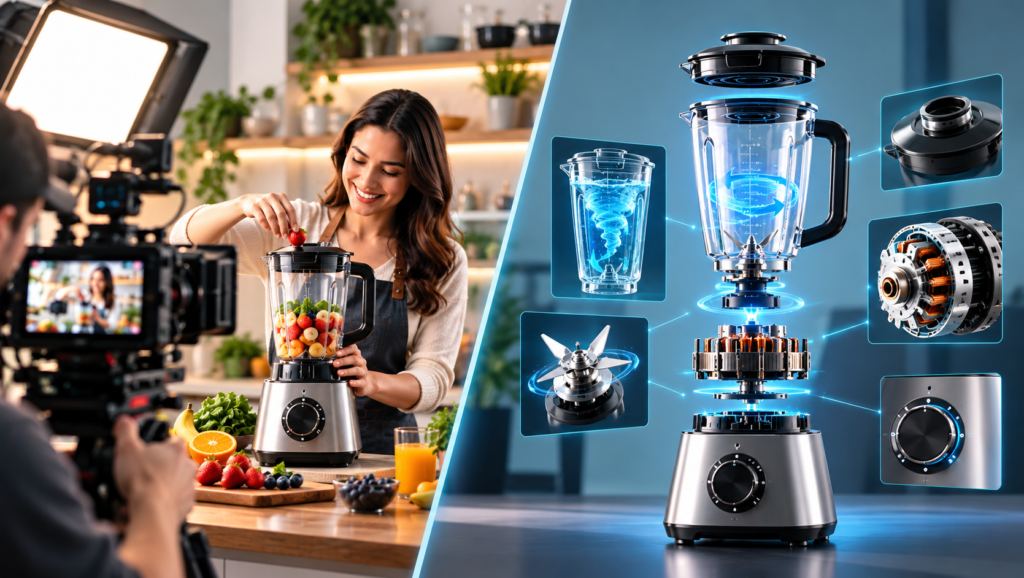
A consumer brand introducing a new kitchen appliance might use live-action footage to show someone preparing food with the product. This helps viewers understand its size, handling and everyday usefulness.
An animated version of the same advertisement could highlight the motor, heating mechanism or internal technology. Rather than competing with each other, the two approaches communicate different product benefits.
Which Style Works Better for Brand Storytelling?
Live action can be effective for stories involving employees, customers, founders and real experiences. Facial expressions, conversations and familiar environments help audiences connect with the people being featured.
Animation can also support storytelling, particularly when a brand wants to create fictional characters, imaginative environments or a distinctive illustrated identity.
The important consideration is the story itself. A customer success story may benefit from real interviews, while an abstract concept about technology or innovation may be easier to communicate through animation.
Which Style Works Better for Product Demonstrations?
For physical products, the decision depends on which features customers need to see.
Live action demonstrates how a product is handled, installed or used. It provides realistic context and can show the product interacting with people or its surroundings.
Animation offers greater control over technical explanations. It can isolate components, reveal internal mechanisms and demonstrate how different parts work together.
For complex products, combining both styles may provide a more complete explanation.
Live Action vs Animation: Which Costs More?
Neither live action nor animation is consistently more expensive. The cost depends on the scope of production, technical requirements, duration, number of scenes and expected quality.
A simple interview filmed in one location may require fewer resources than a custom 3D animation. However, an elaborate commercial involving actors, multiple locations, specialized equipment and extensive post-production can cost more than a straightforward animated explainer.
Animation budgets are influenced by illustration, modelling, character development, movement, rendering and visual effects. Live-action budgets depend more heavily on crew, filming arrangements, equipment, locations and talent.

What Affects Live-Action Video Costs?
Live-action costs generally include pre-production planning, location arrangements, filming and post-production.
The number of shooting days is particularly important. A project involving several locations may require additional crew time, transportation, equipment arrangements and scheduling.
Other factors include actors or presenters, set design, specialized camera equipment, lighting requirements, voiceovers and editing complexity.
Businesses should also consider whether additional filming may be necessary after the initial shoot.
What Affects Animation Video Costs?
Animation costs depend on the visual style and amount of custom work required.
A basic motion graphics video using simple shapes and typography may be less demanding than a character animation with several environments.
Similarly, a 3D product rotation requires different resources from an engineering animation involving hundreds of components.
Detailed modelling, realistic textures, complex simulations and high-resolution rendering can increase production time.
Cost Comparison
| Cost Factor | Live Action | Animation |
|---|---|---|
| Pre-production | Script, locations, shot planning | Script, storyboard, visual design |
| Production | Crew, equipment, filming | Modelling, illustration, animation |
| Talent | Actors, presenters, voiceover | Animators, designers, voiceover |
| Technical complexity | Lighting, camera setups, locations | Effects, movement, rendering |
| Revisions | Editing or additional filming | Editing, redesign or rerendering |
| Additional formats | Reframing and editing | Reframing and scene adjustments |
When comparing quotations, businesses should ensure that both proposals include equivalent deliverables, revision allowances and production requirements.
A lower initial quotation does not necessarily mean a lower final cost if important services are excluded.
Which Takes Longer to Produce: Live Action or Animation?
Production timelines vary significantly between projects.
Live-action filming may be completed within a relatively short period, but the preparation can involve location permissions, scheduling, casting, equipment arrangements and approvals.
Animation does not require a physical shoot, but it involves several development stages that may take considerable time.
A simple animated sequence can sometimes be produced quickly, while detailed 3D animation may require extensive modelling, technical review and rendering.
Live-Action Production Process
A typical live-action project follows five stages:
- Concept and scripting: Define the message, audience, scenes and production requirements.
- Pre-production: Arrange locations, crew, talent, equipment and shooting schedules.
- Filming: Capture the planned scenes, interviews and supporting footage.
- Post-production: Edit footage, add graphics, sound, music and color correction.
- Review and delivery: Complete approvals and export the required video formats.
The availability of people and locations can have a significant influence on the schedule.
Animation Production Process
Animation generally follows a different workflow:
- Concept and script: Establish the communication objective and narrative.
- Storyboard and visual development: Plan scenes, movement and design.
- Asset creation: Develop illustrations, characters or 3D models.
- Animation: Create movements, camera sequences and visual transitions.
- Rendering and post-production: Produce the final visuals, sound and edits.
Animation schedules depend heavily on how quickly visual concepts and technical details are approved.
For either approach, a clearly defined brief and consolidated feedback can help prevent delays.
Which Industries Should Choose Live Action or Animation?
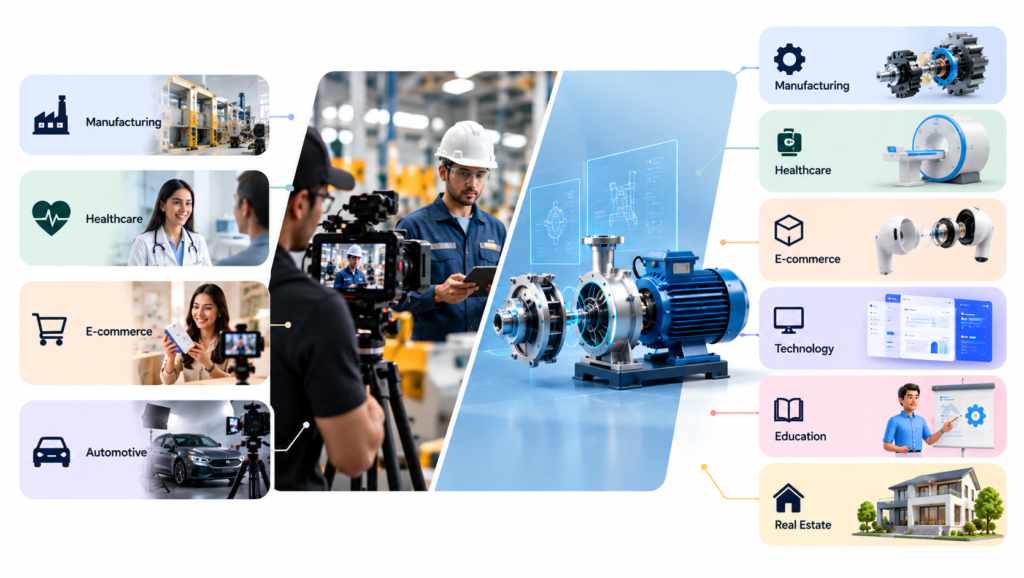
Different industries have different communication requirements. The most suitable video style depends on the product, audience and information being presented.
| Industry | Live-Action Applications | Animation Applications |
|---|---|---|
| Manufacturing | Factory tours, employee interviews | Machinery operation, assembly processes |
| Healthcare | Doctor interviews, facility videos | Medical devices, technical explanations |
| E-commerce | Product usage, lifestyle advertisements | Product features, internal components |
| Technology | Customer stories, company films | Software workflows, abstract concepts |
| Education | Instructor-led lessons, demonstrations | Illustrated concepts, process explanations |
| Real Estate | Property walkthroughs, customer experiences | Architectural visualization, planned developments |
| Automotive | Vehicle demonstrations, brand films | Mechanical systems, component visualization |
Manufacturing and Engineering
Manufacturing businesses often need to demonstrate both operational credibility and technical capabilities.
Live-action footage can showcase production facilities, quality-control procedures and employees working with machinery.
Animation can explain equipment that is too large, complex or difficult to dismantle. It can reveal internal components and illustrate mechanical operations using approved engineering references.
For industrial buyers, these approaches can complement each other by providing real-world context alongside technical explanations.
Healthcare and Medical Equipment
Healthcare organizations frequently communicate information that requires accuracy and clarity.
Live-action videos can feature medical professionals, facilities and demonstrations of equipment in approved settings.
Animation can illustrate device components, operational sequences and concepts that cannot be easily recorded with a camera.
Technical and medical claims should be reviewed by qualified subject-matter experts before publication.
E-commerce and Consumer Products
Consumer brands often use live-action videos to show products in everyday situations.
A furniture company may demonstrate how a chair fits into a living room, while an electronics brand may show someone using its product.
Animation can complement these visuals by highlighting product construction, design features and internal mechanisms.
Brands with accurate 3D product assets may also be able to reuse them for additional product visuals and marketing campaigns.
Can Live Action and Animation Be Combined in One Video?
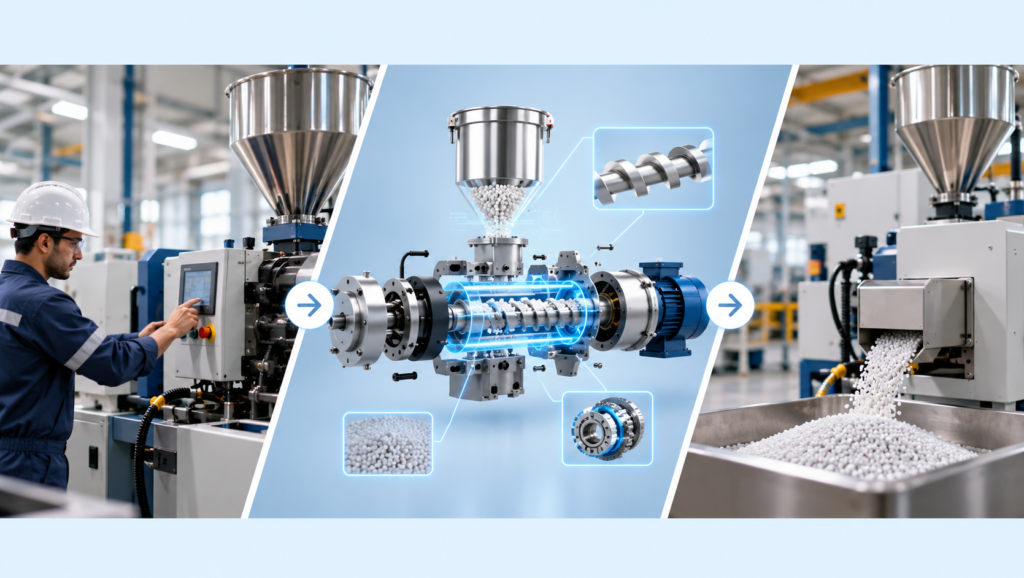
Yes. A hybrid approach combines filmed footage with animated elements to communicate information that either technique might struggle to explain independently.
For example, an industrial company could begin with live-action footage showing a machine operating inside a factory.
The video could then transition into a 3D animation revealing the machine’s internal components and explaining how they interact.
Once the technical explanation is complete, the video could return to real footage showing the equipment in use.
This approach gives viewers both physical context and technical understanding.
Where Do Motion Graphics Fit Into Hybrid Videos?
Motion graphics are commonly added to live-action footage to highlight important information.
A corporate film might feature interviews with employees while animated graphics introduce statistics, milestones or business achievements.
A product demonstration could use labels and arrows to identify features without interrupting the footage.
These additions are useful when the information supports what viewers are already seeing.
When Is a Hybrid Approach Unnecessary?
Combining techniques is not always the best solution.
If a simple interview communicates the message clearly, adding animation may increase costs without improving the result.
Similarly, an animated explainer may not benefit from live-action footage when the entire message involves abstract concepts.
Every technique should have a clear communication purpose.
How Do You Choose Between Live Action and Animation?
The decision becomes easier when businesses start with the audience’s information needs.
Before selecting a style, identify what viewers should understand or remember after watching the video.
A business trying to establish credibility through its employees may benefit from live action. A company explaining a complex technical process may need animation.
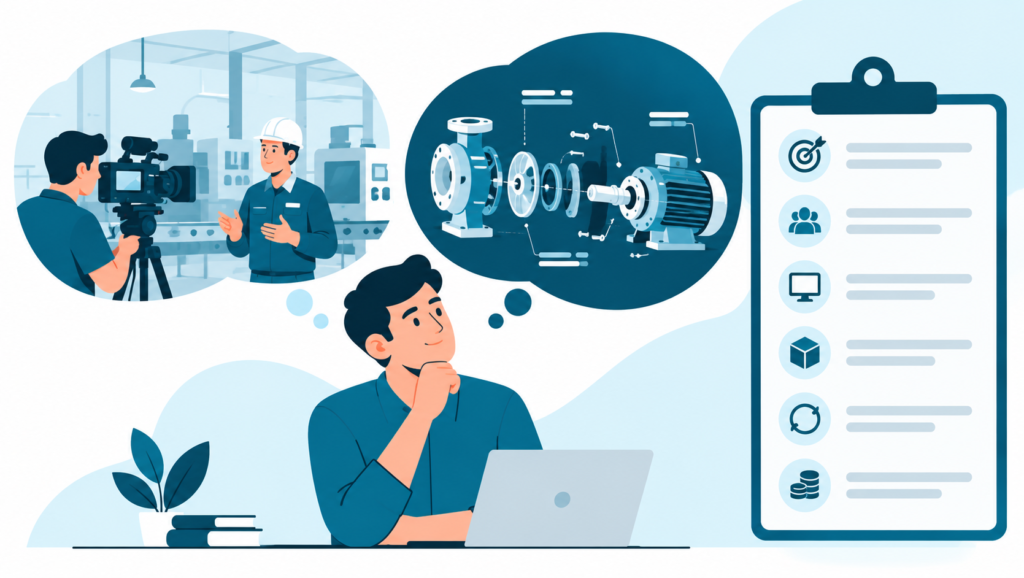
Six Questions to Ask Before Production
- What is the main objective? Decide whether the video should build trust, explain a process, demonstrate a product or support advertising.
- Who is the target audience? Technical buyers may require detailed explanations, while general consumers may respond better to everyday demonstrations.
- What needs to appear on screen? Determine whether viewers need real-world footage, digital illustrations or both.
- Is the product available? Products that are still being developed may be suitable for animation using approved design references.
- How often will the content change? Consider whether future updates, product variations or additional versions are likely.
- What is the available budget and timeline? Match production requirements to the resources available rather than choosing a style based on assumptions.
Answering these questions before approaching a production company helps create a clearer brief and more accurate quotation.
Common Mistakes Businesses Make When Choosing a Video Style
One common mistake is selecting a style because it looks visually impressive without considering whether it communicates the message effectively.
For example, a detailed 3D animation may be unnecessary when a simple diagram would explain the concept more clearly.
Another mistake is assuming that animation is always cheaper because it does not involve filming. Complex modelling, character development and rendering can require considerable resources.
Businesses may also underestimate the preparation required for live-action production. Locations, presenters, products and schedules need to be organized before filming begins.
Finally, late-stage changes can affect both approaches. Replacing an approved animation sequence or arranging additional filming may increase costs and delay delivery.
A clear script, storyboard or shot list helps reduce these risks.
3DTRIXS Insight: Choose the Style Around What the Audience Needs to See
At 3DTRIXS, the starting point for choosing a video style is understanding the message rather than selecting a production technique immediately.
A company profile film may require real employees, workplaces and leadership interviews because these elements establish credibility.
A technical product demonstration may need 3D animation because internal components cannot be shown clearly through conventional filming.
In some projects, combining both approaches provides a stronger explanation.
Consider a water-treatment company introducing a filtration system. Live-action footage could show the equipment installed at a facility and an operator using it. Animation could then reveal the water flow and internal filtration process.
This is an illustrative example rather than a documented client project, but it demonstrates why the two techniques can work together.
The goal is to select the approach that communicates the required information clearly while remaining practical for the project’s budget, timeline and intended platforms.
Live-Action and Animation Examples From the 3DTRIXS Portfolio
Comparing completed videos can help businesses understand how different visual approaches communicate information.
For a live-action reference, consider Mangaldeep | Dhuno Cups, which can be used to discuss real-world product presentation and filmed storytelling.
For animation, the 3D Product Showreel provides a reference point for discussing digital product visualization and animated presentation.
Both examples are referenced in the existing blog. Their video URLs should be verified before embedding them on the updated page.
Businesses can also explore the 3DTRIXS portfolio for additional examples of video production and animation work.
Frequently Asked Questions About Live Action vs Animation
1. Is live action better than animation for business videos?
Neither is universally better. Live action is useful for showing real people, products and environments, while animation is effective for explaining abstract concepts, technical processes and internal product components. The right choice depends on the message.
2. Which is cheaper, live action or animation?
The cost depends on production complexity. A simple live-action interview may cost less than detailed 3D animation, while a commercial involving several locations and actors may cost more than a basic animated explainer.
3. Can businesses combine live action and animation?
Yes. Businesses can combine real footage with 2D animation, 3D animation or motion graphics. This is particularly useful when a video needs to show real-world applications alongside technical explanations.
4. Is animation suitable for professional corporate videos?
Yes. Animation is commonly used for corporate explainers, training videos, technology demonstrations and internal communication. Professional quality depends on scripting, visual design, animation and production execution.
5. Which video style is better for product marketing?
Live action works well for demonstrating real-world product usage, while animation can highlight design features and internal mechanisms. Some product marketing campaigns benefit from combining both styles.
6. Which is easier to update, live action or animation?
It depends on the required change. Animation may allow modifications to existing digital assets, but substantial revisions can require rebuilding scenes or rerendering. Live-action updates may involve replacing footage or arranging another shoot.
7. Can animation be created before a product is manufactured?
Yes. Animation can be developed using approved CAD files, product specifications and design references. Businesses should clearly distinguish proposed features from verified product capabilities.
8. How do I decide which video style is right for my company?
Identify the video’s purpose, audience, message, budget and required delivery formats. Choose live action when real-world evidence is important, animation when visual explanation is necessary, or a hybrid approach when both serve a clear purpose.
Create Live-Action and Animation Videos With 3DTRIXS
Choosing between live action and animation is not simply a matter of visual preference. It is a decision about how to communicate your message most effectively.
Live action helps businesses present real people, products and experiences. Animation provides the flexibility to explain complicated concepts, visualize technical details and create controlled digital environments.
At 3DTRIXS, we provide live-action video production, 2D animation, 3D animation, motion graphics and hybrid video production for businesses across different industries.
Whether you are planning a corporate film, product demonstration, animated explainer or commercial, our team can help identify a suitable production approach based on your objectives.





Founded: 2014
Team Size: 40 to 50 Employees
Clients: Amazon, Paypal, Deloitte, Levis, Intel, EY and many more.
Pricing: $1,000+
Completed Projects: 8000+ | Clients: 800+ | Serving Countries: 15+

Have a Project in Mind?
Tell us about your requirements, and our team will get in touch with you.
